
Key takeaways
- Mentioned in 44 of 100 AI answers, up from 18: a gain of 26 percentage points.
- All three tested AI engines named the brand after 3 months, up from two.
- Connect the shopper's concern with a specific formula, then make its ingredient information and supporting evidence easy to inspect.
About the company
Skincare built around named ingredients
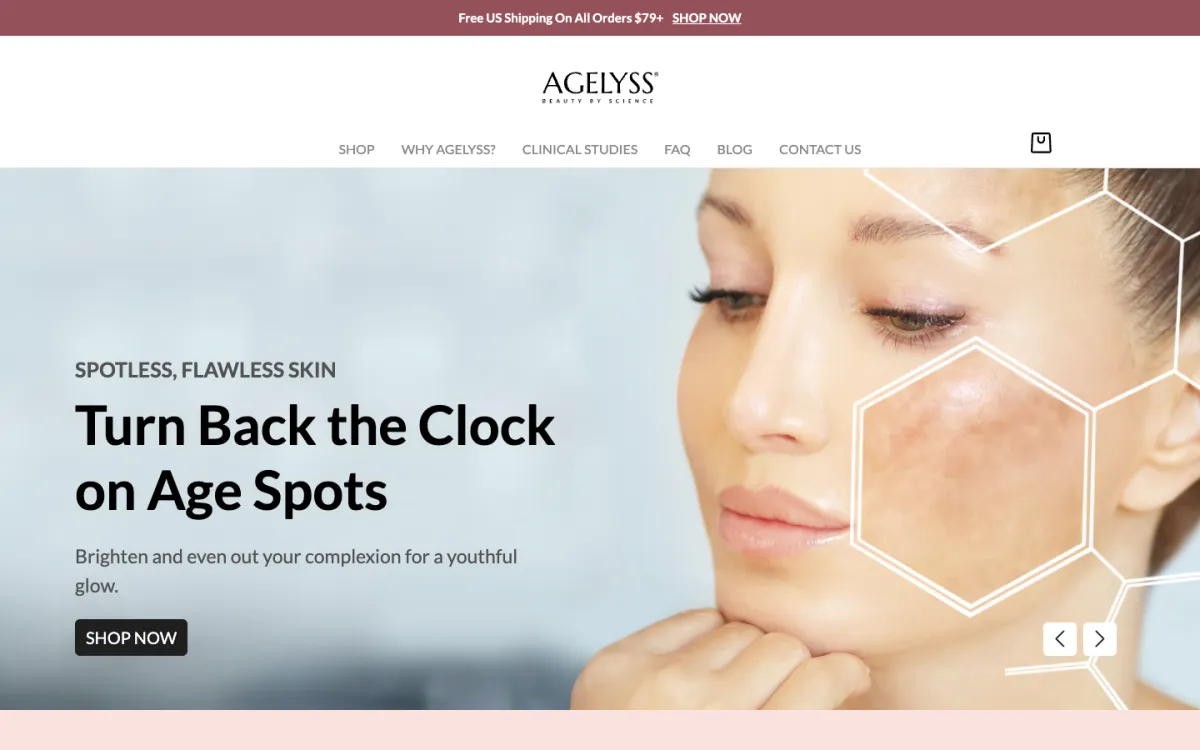
Agelyss sells skincare and beauty products — creams, moisturizers, eye care, a lip plumper, and lash and brow products — under the line "Beauty By Science".
Ingredient research is at the center of how it presents the range. A dedicated clinical-studies page lists named, trademarked ingredients, links each one to the study the company cites, and says which products contain it.
Product pages follow the same structure: the Age & Dark Spot Remover page, for example, groups its content into description, ingredients, clinical studies, usage and FAQ tabs.
The problem
A science-led message still leaves the shopper's questions open
A shopper comparing face creams may start from a concern — uneven-looking skin, the appearance of fine lines, hydration — and want to know which product fits it and what sets its formula apart.
Research about an ingredient is not the same as research on a finished formula, so the scope of each piece of evidence matters as much as its existence. An answer that blurs the two overstates what is known.
The opportunity is to make the path from concern to product to ingredient clearer on the pages an answer might cite:
“Which skincare brands offer products for uneven-looking skin and publish detailed ingredient information?”
The goal
Increase Agelyss's presence in unbranded skincare discovery answers and give interested shoppers a direct route to the product and ingredient information they need.
The approach
Map the purchase questions, check what answers claim, then strengthen the path to the product
Map the questions behind the purchase
Prompts Monitoring monitors category and ingredient questions across the range, with moisturizers, eye care and products for uneven-looking skin kept apart so the result can be read by shopping need.
25Unbranded discovery prompts
Check what each answer actually explains
Sentiment & Brand Risk flags answers that name the wrong product, misstate its ingredients, or promise an outcome or timeline beyond the supporting evidence.
3AI engines tested each round
Strengthen the path from explanation to product
Content Fixes prioritizes concise product summaries, readable ingredient lists, useful FAQs, and links from each educational page to the matching formula.
75Answers per measurement round
The fixes
What a shopper needs to compare one formula with another
The concern, matched to a product
Each skincare concern pointing to the specific formula in the range, so an answer can name the product rather than only the brand.
Ingredients that can be read and quoted
Ingredient lists available as plain text on each product page, retrievable from its tab structure for a side-by-side comparison.
Evidence kept to its scope
Each study attached to the ingredient it examined, and clearly distinct from statements about the finished product.
The results
Agelyss went from 18 to 44 mentions per 100 AI answers in 3 months
A mention in a broad skincare list and a citation to the relevant formula are different stages of evaluation; tracking the destination shows which product pages need attention next.
Where it landed:
- 18 → 44 AI answers mentioning Agelyss, per 100
- 44% Of answers naming the brand after 3 months
- 2 → 3 tested AI engines naming the brand
- Mention rate, over 3 months.
- +26 pts
- Of answers named Agelyss after 3 months.
- 44%
- Organic growth over the same window.
- +290%
The same 25 unbranded discovery prompts, with the same mix of product categories and ingredient questions, ran once across three AI engines at baseline and again after 3 months: 75 completed answers per round. Figures are from those fixed prompt sets, not from every AI answer or from attributed revenue.